Examining Slot Machine Random Number Generators Against Poker Tournament Prize Pool Mechanics
Nils Lorenz · Sep 25, 2026
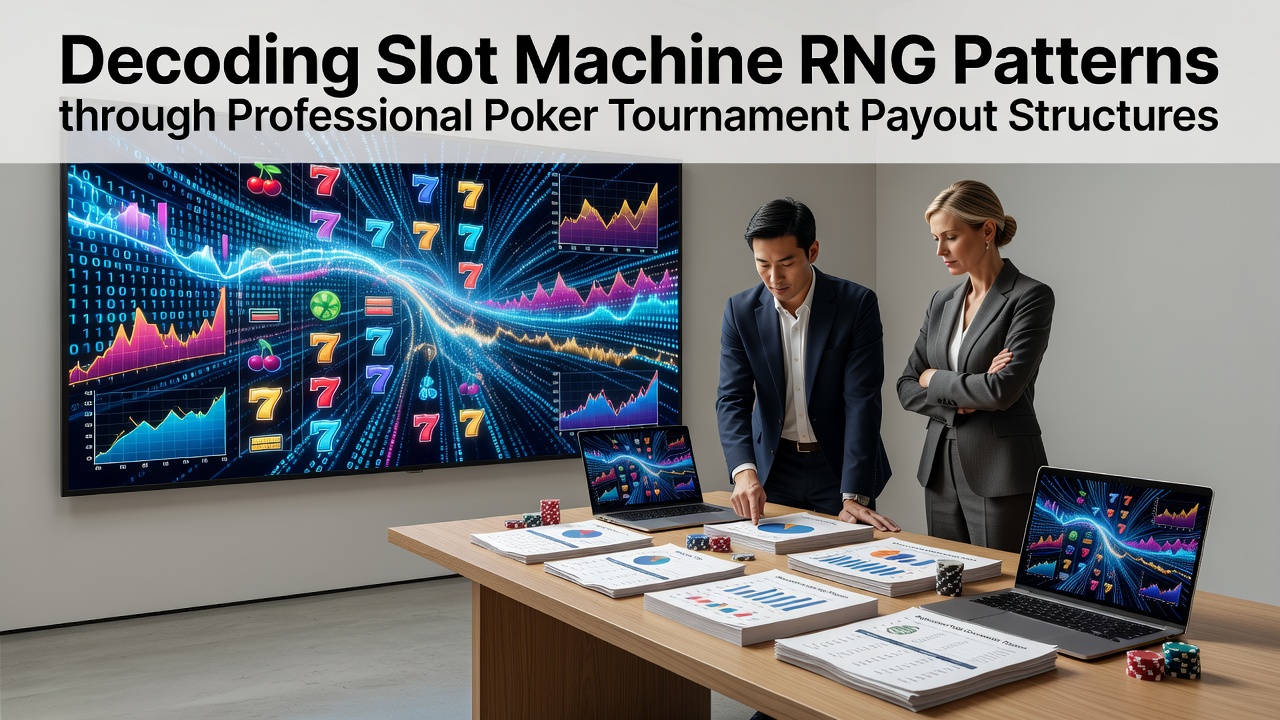
Examining Slot Machine Random Number Generators Against Poker Tournament Prize Pool Mechanics
Slot machine random number generators operate through complex algorithms that produce outcomes independent of previous results, while professional poker tournament payout structures follow predetermined formulas based on total entries and prize pools. Observers note that these two systems function under entirely separate mathematical principles, with no documented mechanism allowing one to inform patterns in the other. Data from regulatory testing shows slot RNGs undergo rigorous certification to ensure uniform distribution across all possible outcomes, whereas poker payouts distribute fixed percentages to top finishers according to event rules set by tournament organizers.
Certification bodies in various regions verify that slot machines generate numbers at rates exceeding thousands per second, each corresponding to reel positions or symbol combinations. Research from institutions such as the University of Nevada's gaming laboratories confirms these sequences remain statistically unpredictable even after millions of spins. Poker tournament structures, by contrast, rely on transparent schedules where organizers allocate percentages like 30 percent to first place and decreasing shares to subsequent positions based on participant counts.
Core Mechanics of Slot RNG Systems
Modern slot RNGs use pseudorandom number generators seeded with external inputs including timestamps and hardware entropy sources, creating sequences that pass strict statistical tests for randomness. Figures from the Nevada Gaming Control Board reveal annual audits of thousands of machines confirm compliance with uniformity standards, preventing any predictable cycles. Those who study these systems find that virtual reel mapping further layers complexity by assigning multiple numbers to certain symbols, yet the underlying generation process stays independent of external factors like time of day or player volume.
Testing protocols require RNGs to demonstrate equal probability for every outcome across extended trial periods, a standard enforced through continuous monitoring by state regulators. September 2026 saw updated compliance reports from Australian authorities highlighting similar verification processes across licensed venues, reinforcing that no external data streams alter the core generation method.
Poker Tournament Payout Structures Explained
Professional poker events calculate prize distributions through formulas that factor total buy-ins, house fees, and guaranteed amounts, producing fixed payout ladders published before registration closes. Data from major circuits such as the World Series of Poker shows structures typically pay 15 to 20 percent of the field, with percentages scaled to balance risk and reward across varying field sizes. These distributions remain deterministic once the player count is finalized, allowing participants to calculate exact expected values based on position and stack sizes.
Organizers adjust payout percentages according to event scale, with larger fields creating steeper top-heavy structures while smaller events spread rewards more evenly. Industry reports indicate these models derive from actuarial calculations rather than random processes, creating predictable return rates tied directly to participation numbers.

Absence of Cross-System Pattern Linkages
Mathematical analyses consistently demonstrate that slot RNG outputs maintain statistical independence from any structured external models, including those used in poker events. Studies conducted by the Canadian Centre for Gaming Research found no transferable patterns when comparing certified RNG sequences against payout matrices from unrelated gaming formats. Attempts to map poker prize distributions onto slot symbol probabilities fail basic independence tests because RNG cycles reset continuously without memory of prior results.
Regulatory frameworks across multiple jurisdictions require operators to maintain separation between game types, ensuring that data from one category does not influence mechanics in another. Evidence from European testing laboratories reinforces this isolation through repeated trials showing zero correlation coefficients between the systems.
Regulatory Oversight and Verification Standards
Gaming commissions enforce RNG certification through third-party laboratories that subject machines to millions of simulated spins before approval. These evaluations measure deviation from expected probabilities using chi-square and serial correlation tests, with failure rates resulting in immediate hardware rejection. Poker tournament oversight falls under separate event licensing that focuses on prize pool integrity and player fund protection rather than algorithmic randomness.
Reports issued in September 2026 by Canadian provincial regulators documented ongoing compliance audits that continue to affirm these distinct verification pathways. Industry associations track both areas separately, publishing annual summaries that highlight advancements in testing methodologies without suggesting integrated analytical approaches.
Conclusion
Available evidence establishes that slot machine RNG patterns and poker tournament payout structures operate as independent domains governed by different mathematical foundations. Certification data and regulatory reports confirm the absence of transferable decoding methods between the two. Those examining these systems find value in understanding each on its own terms through established testing protocols and published payout schedules.