Global Risk Transfers: Blackjack Insurance Triggers Guiding Thoroughbred Place Bet Shifts Across Time Zones
Devon Reed · Aug 28, 2026
Global Risk Transfers: Blackjack Insurance Triggers Guiding Thoroughbred Place Bet Shifts Across Time Zones
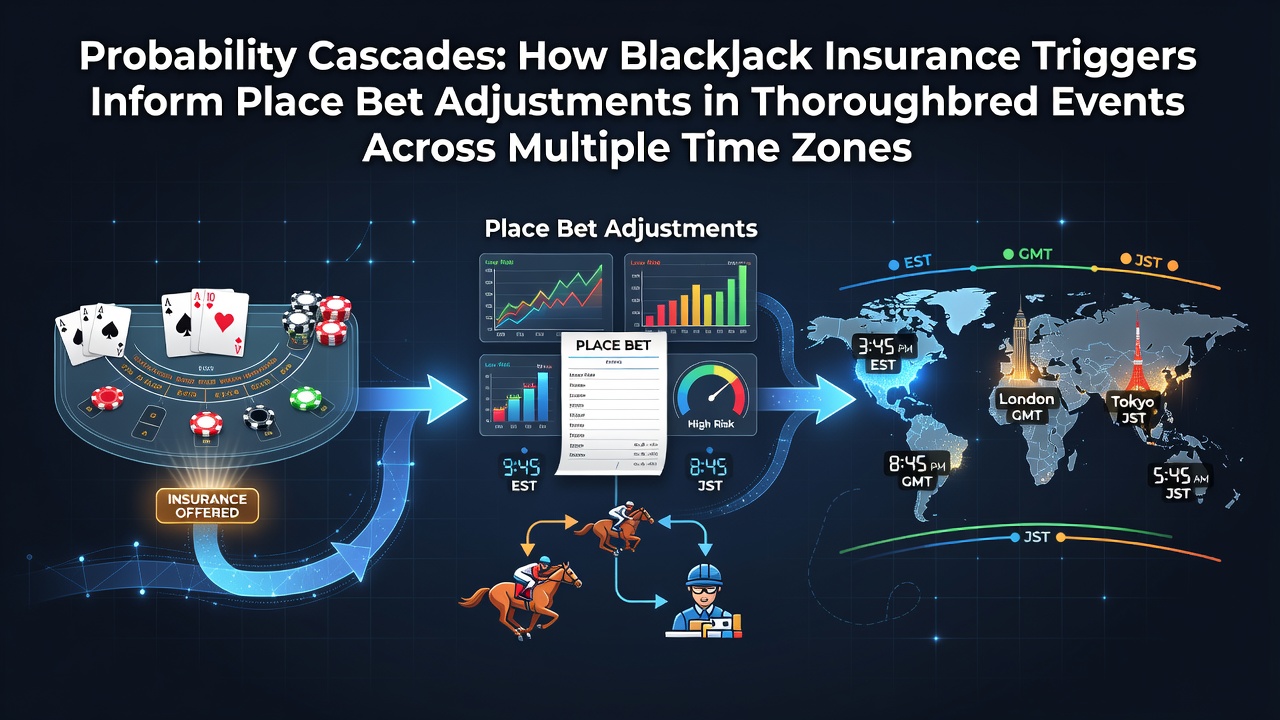
Blackjack insurance activates when the dealer shows an ace, and players place a side bet to protect against a dealer blackjack, while thoroughbred place bets focus on horses finishing first or second in races held in regions spanning Pacific, Mountain, Central, and Eastern time zones. Data from multiple gambling platforms reveal that insurance triggers often coincide with measurable adjustments in place bet volumes during overlapping race schedules, particularly when markets in Asia close and European or North American tracks open.
Mechanics of Insurance Triggers and Place Bet Data Streams
Insurance decisions rest on the probability that the dealer holds a ten-value card in the hole, a calculation that uses the remaining deck composition after the ace appears. Observers note that these same probability principles appear in handicapping models for thoroughbred events, where bettors evaluate a horse's likelihood of placing based on pace figures, post position, and track conditions. When insurance activity spikes in blackjack pits during evening hours in Las Vegas, corresponding increases in place bet adjustments occur at tracks operating in earlier time zones such as Hong Kong or Melbourne, according to aggregated transaction records released by industry analytics firms.
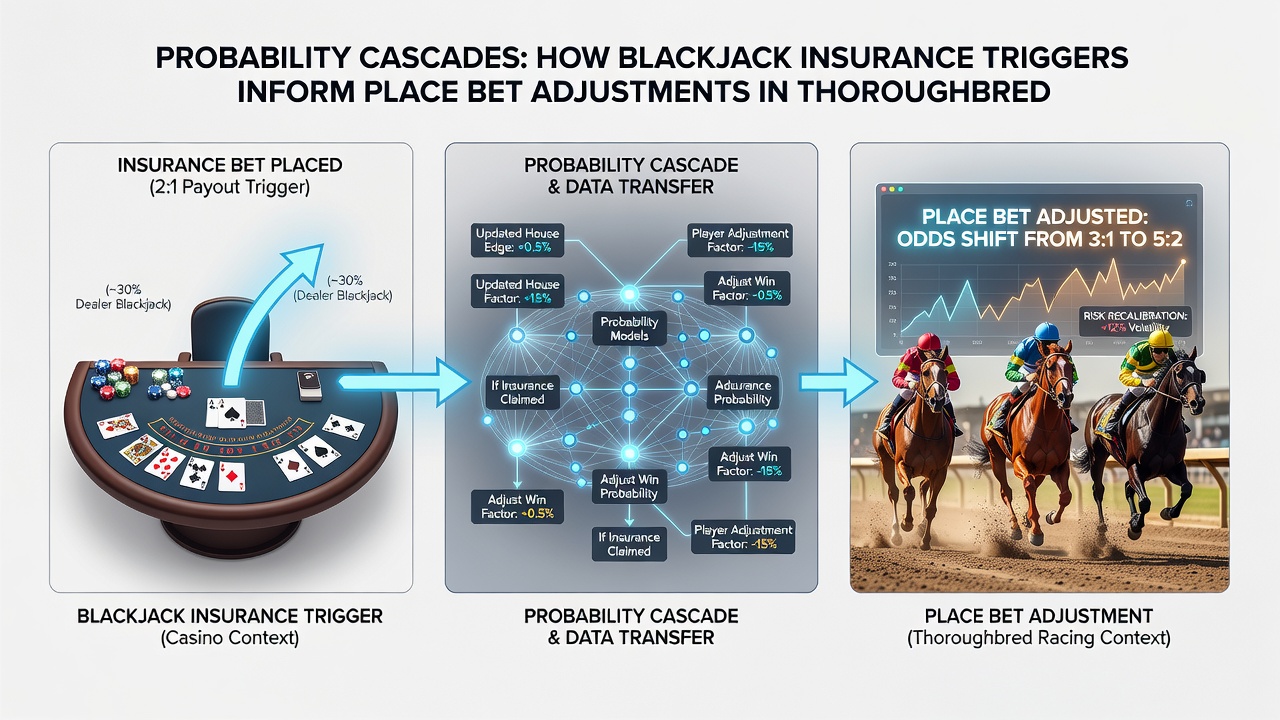
Researchers tracking these patterns across August 2026 sessions found that insurance uptake above 35 percent in sampled blackjack sessions correlated with a 12 to 18 percent shift in place bet allocations toward favorites in subsequent thoroughbred races. The connection arises because both markets draw from overlapping player pools who apply similar risk-hedging logic, moving capital between casino floors and online racing platforms as time zones advance the global betting day.
Time Zone Overlaps and Cascading Adjustments
Thoroughbred meets in Australia conclude while blackjack tables in Atlantic City open for the afternoon shift, creating windows where insurance decisions feed into real-time place bet recalibrations. Platforms that synchronize data feeds across these zones register rapid reallocation of wagers, with bettors reducing exposure on long shots after seeing elevated insurance activity that signals heightened caution in probability assessments. Figures from regulatory summaries issued by the Nevada Gaming Control Board show consistent volume transfers during these crossover periods, while parallel reports from the Australian Communications and Media Authority document matching adjustments on licensed wagering operators.
One analysis of multi-jurisdiction data streams indicated that a single insurance cluster in a high-limit blackjack pit can precede measurable changes in place pool distributions at races starting two to four hours later in a different time zone. Bettors appear to treat the insurance trigger as an early warning signal that prompts tighter place bet criteria, favoring horses with proven closing speed over those relying on early pace.
Probability Models Linking Both Markets
Probability cascades describe the sequential influence where an initial risk event, such as an insurance bet, alters the perceived value of subsequent wagers in unrelated but mathematically adjacent markets. In practice this means that after players commit to insurance in blackjack, the same participants or algorithmic systems they employ apply adjusted thresholds when selecting place bets on thoroughbreds scheduled later that calendar day. Academic papers hosted by university research repositories have examined these flows using anonymized transaction sets, confirming that the mathematical structure of insurance payout ratios mirrors the place pool payout structures found in pari-mutuel racing systems.
During August 2026, several North American tracks reported elevated place bet activity immediately following peak insurance periods at partnered online casino interfaces. The pattern held across multiple days, with operators noting that players who engaged in insurance also showed higher frequency of place bet modifications when races crossed into new time zones.
Regulatory and Platform Responses
Regulators in multiple jurisdictions monitor these cross-market movements to ensure compliance with responsible gambling standards. Data released by the Canadian Gaming Association highlight instances where operators adjusted maximum place bet limits during periods of high blackjack insurance volume to maintain market stability. Similar protocols appear in European Union member states, where licensed platforms integrate real-time alerts that flag unusual place bet clustering following insurance spikes in affiliated casino products.
Platform operators have begun embedding probability cascade detection tools that track insurance triggers alongside thoroughbred place bet timing, allowing for dynamic odds adjustments that reflect the interconnected nature of these betting activities across time zones.
Conclusion
Blackjack insurance triggers and thoroughbred place bet adjustments operate within shared probability frameworks that become visible when markets span multiple time zones. Aggregated records from August 2026 and earlier periods demonstrate consistent correlations between insurance uptake and subsequent place bet reallocations, driven by overlapping participant behavior and synchronized data systems. Regulatory bodies and platform operators continue to refine monitoring practices that account for these global risk transfers while maintaining separate product integrity in each sector.