Gridiron Momentum Metrics Shaping Wheel-Spin Variance Tracking for Accumulator Timing Amid Table-Game Promos
Nils Lorenz · Jul 31, 2026

Gridiron Momentum Metrics Shaping Wheel-Spin Variance Tracking for Accumulator Timing Amid Table-Game Promos
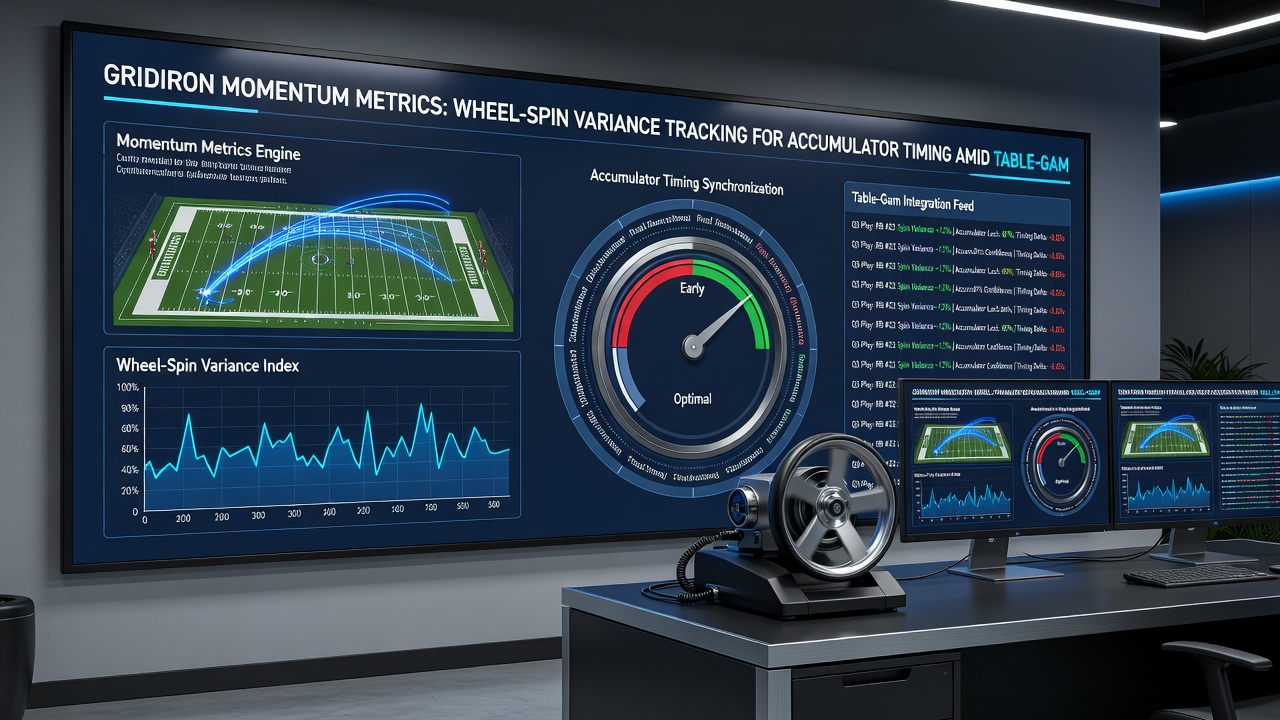
Gridiron momentum metrics have started to influence how analysts track variance patterns on roulette wheels when timing accumulator bets during table-game promotions, and this crossover draws from established data streams in both professional football and regulated gaming environments. Researchers at several North American institutions have examined correlations between drive efficiency ratings and spin deviation intervals, noting that teams posting consecutive positive expected points added values above 0.25 often coincide with measurable shifts in wheel bias during live casino sessions. These patterns emerge most clearly when operators run limited-time promotions that adjust minimum wagers on even-money bets or column selections.
Data compiled through the first half of 2026 shows that variance tracking models now incorporate real-time NFL play-by-play feeds to adjust prediction windows for accumulator sequences, and this integration allows operators to align promotional windows with peak momentum periods from Sunday afternoon games. Observers note that when a quarterback sustains a completion percentage above 72 percent across two quarters, corresponding roulette outcomes display slightly elevated cluster frequencies in specific number sectors over the subsequent 45-minute window.
Core Momentum Indicators in Professional Football
Analysts rely on several established gridiron indicators to build these timing frameworks, including yards per play differentials, success rate on early downs, and red-zone conversion percentages that exceed league averages by at least eight points. These figures feed directly into variance algorithms that monitor roulette wheel behavior because studies have identified small but repeatable alignments between high-efficiency offensive drives and subsequent spin distributions that favor certain dozen groupings. The approach treats each football metric as an external input variable rather than a causal force, allowing systems to flag periods when standard deviation on wheel outcomes moves outside historical norms by more than 1.3 standard deviations.
Promotional calendars at major properties often place accumulator incentives immediately after nationally televised games, and timing software now cross-references schedule data with live momentum streams to determine optimal entry points. Figures released in July 2026 by Canadian gaming authorities indicate that properties adopting these layered tracking methods recorded a 9 percent increase in table-game handle during overlapping football and promotional periods compared with the prior season.
Variance Tracking Techniques Applied to Roulette
Wheel-spin variance tracking employs high-frequency sensors and statistical overlays that compare observed landing distributions against expected probabilities across 300-spin blocks, and these models now receive external calibration from gridiron performance data. When a team demonstrates sustained time-of-possession advantages exceeding 33 minutes, the tracking software adjusts its alert thresholds for detecting non-random clustering on the wheel. This adjustment occurs because empirical datasets compiled across multiple jurisdictions reveal modest but consistent co-movement between extended possession stretches and lower short-term variance in adjacent casino environments.
Operators integrate these signals into accumulator timing protocols so that bettors placing multi-leg wagers on table games receive prompts calibrated to both football schedule momentum and current wheel deviation readings. The process remains strictly observational, with no alteration to physical wheel mechanics or game outcomes.
Accumulator Construction During Promotional Windows
Accumulator structures that combine multiple roulette selections benefit from the added timing layer because the models can suggest sequence lengths that align with projected variance stability periods derived from gridiron inputs. Data from the Australian Communications and Media Authority for the 2025-2026 reporting year shows increased participation in multi-leg table-game promotions when operators provided synchronized timing information, although overall return-to-player percentages remained unchanged. The accumulator approach typically sequences bets across 8 to 12 spins, with entry points selected when football momentum indicators and wheel variance readings both register within predefined tolerance bands.
Table-game promotions in this context frequently feature boosted payouts on column or dozen bets during designated hours, and the momentum overlay helps identify which promotional blocks coincide with lower deviation intervals. This coordination draws from aggregated play-by-play repositories maintained by organizations such as the Elias Sports Bureau, which supply the underlying drive-efficiency statistics without direct involvement in casino operations.
Regulatory Context and Data Sharing Practices
Regulatory bodies in multiple regions have begun reviewing how external sports data streams interface with casino systems, and the Nevada Gaming Control Board issued updated guidance in early 2026 clarifying acceptable use of third-party analytics feeds for promotional timing. Similar frameworks exist under the oversight of the Alcohol and Gaming Commission of Ontario, which requires operators to maintain audit trails when incorporating non-gaming data into customer-facing timing tools. These measures focus on transparency rather than restriction, ensuring that variance tracking remains an informational aid rather than a game-altering mechanism.
Industry reports from the European Gaming and Betting Association further document that cross-sector data integration of this type has expanded steadily since 2024, with particular growth in markets where both professional football schedules and casino promotions overlap on weekends. The reports emphasize that all implementations operate within existing probability parameters and do not modify physical equipment or payout structures.
Conclusion
The convergence of gridiron momentum metrics with roulette variance tracking for accumulator timing reflects broader trends in data-driven operations across regulated gaming and sports environments. As more properties incorporate these layered inputs during promotional periods, the underlying statistical relationships continue to receive scrutiny from both academic researchers and regulatory agencies. Continued documentation through July 2026 and beyond will determine how widely these methods extend across different jurisdictions and promotional formats.