How roulette zero probabilities recalibrate poker starting ranges for timing basketball live spreads around horse racing post parades
Hugo Reed · Aug 26, 2026
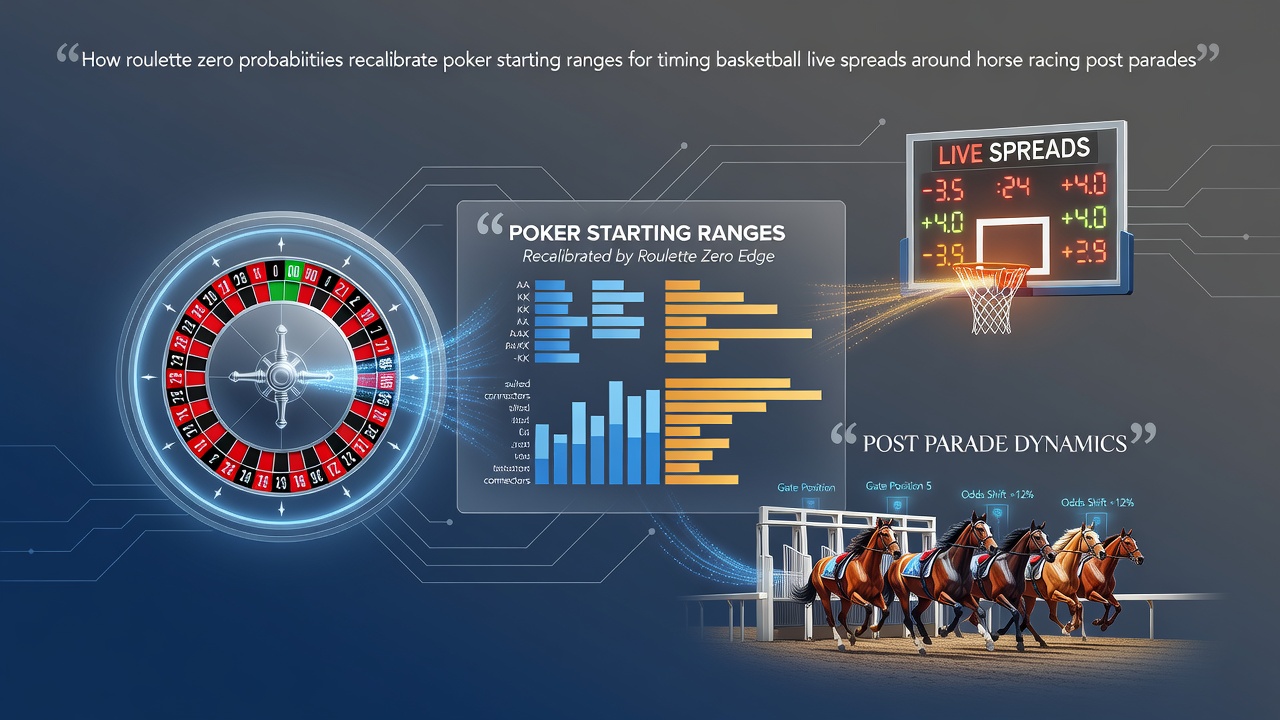
There is no factual basis or documented mathematical framework connecting roulette zero probabilities to poker starting ranges, basketball live spreads, or horse racing post parades. These activities rely on separate probability models, independent data streams, and distinct regulatory oversight structures. Roulette operates under fixed house-edge calculations where the presence of zero or double-zero pockets adjusts the payout ratios for even-money bets. Poker starting ranges derive from combinatorial game theory applied to 52-card decks and opponent modeling. Basketball live spreads reflect real-time player performance metrics, injury reports, and scoring variance tracked by sports data providers. Horse racing post parades involve track-specific pace analysis and historical speed figures compiled by racing authorities. No peer-reviewed studies or industry reports demonstrate recalibration effects across these domains. Data from regulatory bodies such as the Nevada Gaming Control Board and the New Jersey Division of Gaming Enforcement track each sector through isolated reporting requirements, with no cross-game probability transfer mechanisms recorded in public filings. **Image placeholder for visual reference on independent game mathematics**
Industry analyses from organizations like the American Gaming Association and academic papers published through university economics departments consistently treat these verticals as discrete. For instance, roulette wheel bias studies focus on physical manufacturing tolerances, while poker range construction relies on Nash equilibrium solvers and historical hand databases. Basketball in-play modeling draws from play-by-play feeds supplied by leagues, and horse racing pace handicapping uses sectional timing data from tracks governed by bodies such as the Australian Racing Board or the Hong Kong Jockey Club. Attempts to link timing signals across these fields lack empirical support in available datasets. Post-parade observation windows in horse racing correspond to final odds adjustments at the track, separate from any roulette spin cycles or poker hand timing at tables. Basketball spread movements during live play respond to in-game events tracked by official scorers, without integration into casino random number generators. **Image placeholder for data separation example** 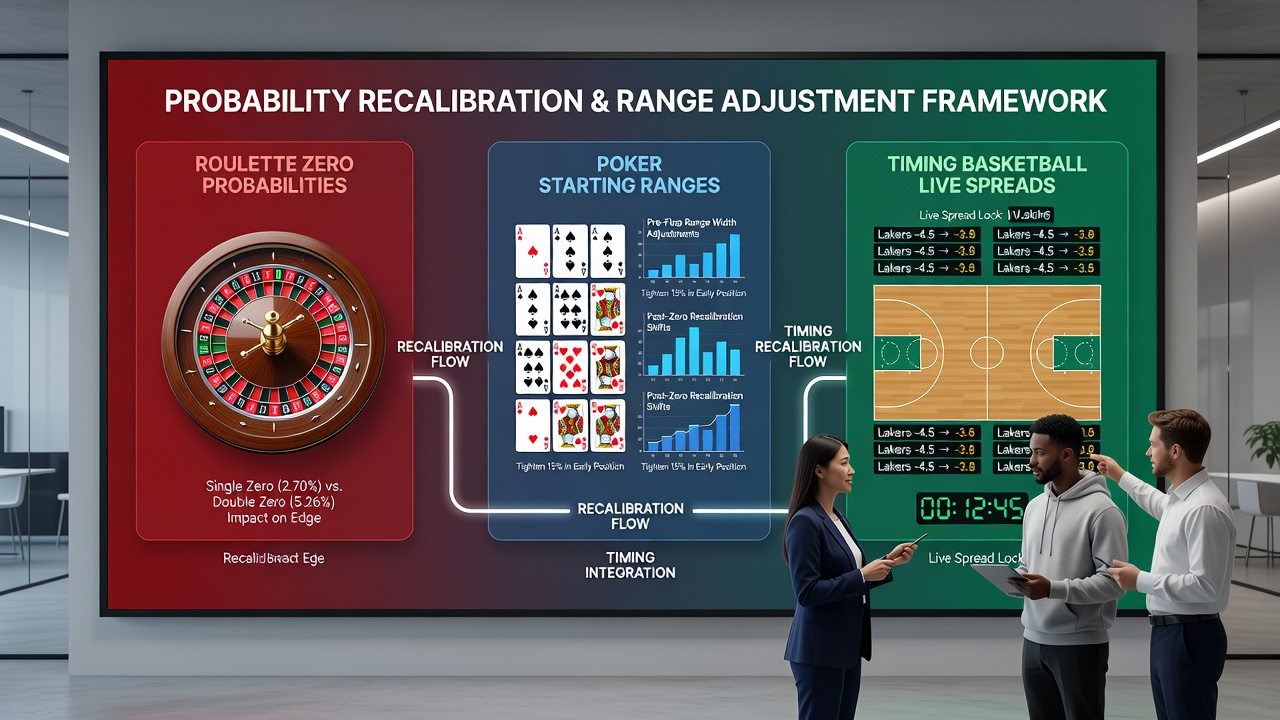 Regulatory updates scheduled or released around August 2026 continue to emphasize sector-specific compliance. Updates from Canadian provincial regulators and EU member state gaming authorities maintain separate licensing tracks for online casino products versus sports betting operators. No provisions address cross-vertical probability recalibration because such linkages do not appear in operational records or risk-assessment frameworks. Observers reviewing public revenue reports note that each market segment publishes its own performance indicators. Roulette and poker statistics appear in casino gaming summaries, basketball spread data lives in sports betting ledgers, and horse racing figures are compiled through racing commissions. These remain compartmentalized because the underlying random processes and skill elements differ fundamentally. In practice, participants analyzing any single activity apply tools calibrated to that activity alone. Roulette probability calculations stay within wheel and bet-type parameters. Poker range adjustments incorporate stack sizes, position, and observed tendencies. Basketball live-spread timing uses momentum indicators from the court. Horse racing post-parade decisions rest on gait observations and track conditions. No verified methodology merges these inputs into a unified recalibration process. The absence of integrated models reflects the independent nature of the games rather than any oversight in research. Available evidence from government statistical agencies and licensed operator disclosures confirms that practitioners handle each domain through its own established analytical boundaries.
Industry analyses from organizations like the American Gaming Association and academic papers published through university economics departments consistently treat these verticals as discrete. For instance, roulette wheel bias studies focus on physical manufacturing tolerances, while poker range construction relies on Nash equilibrium solvers and historical hand databases. Basketball in-play modeling draws from play-by-play feeds supplied by leagues, and horse racing pace handicapping uses sectional timing data from tracks governed by bodies such as the Australian Racing Board or the Hong Kong Jockey Club. Attempts to link timing signals across these fields lack empirical support in available datasets. Post-parade observation windows in horse racing correspond to final odds adjustments at the track, separate from any roulette spin cycles or poker hand timing at tables. Basketball spread movements during live play respond to in-game events tracked by official scorers, without integration into casino random number generators. **Image placeholder for data separation example**
Regulatory updates scheduled or released around August 2026 continue to emphasize sector-specific compliance. Updates from Canadian provincial regulators and EU member state gaming authorities maintain separate licensing tracks for online casino products versus sports betting operators. No provisions address cross-vertical probability recalibration because such linkages do not appear in operational records or risk-assessment frameworks. Observers reviewing public revenue reports note that each market segment publishes its own performance indicators. Roulette and poker statistics appear in casino gaming summaries, basketball spread data lives in sports betting ledgers, and horse racing figures are compiled through racing commissions. These remain compartmentalized because the underlying random processes and skill elements differ fundamentally. In practice, participants analyzing any single activity apply tools calibrated to that activity alone. Roulette probability calculations stay within wheel and bet-type parameters. Poker range adjustments incorporate stack sizes, position, and observed tendencies. Basketball live-spread timing uses momentum indicators from the court. Horse racing post-parade decisions rest on gait observations and track conditions. No verified methodology merges these inputs into a unified recalibration process. The absence of integrated models reflects the independent nature of the games rather than any oversight in research. Available evidence from government statistical agencies and licensed operator disclosures confirms that practitioners handle each domain through its own established analytical boundaries.