Sector Mapping on Spinning Wheels Aligning with Basketball Assist Ratios to Calibrate Poker Continuation Bets Amid Racing Pace Variations
Hugo Reed · Jul 15, 2026
Sector Mapping on Spinning Wheels Aligning with Basketball Assist Ratios to Calibrate Poker Continuation Bets Amid Racing Pace Variations
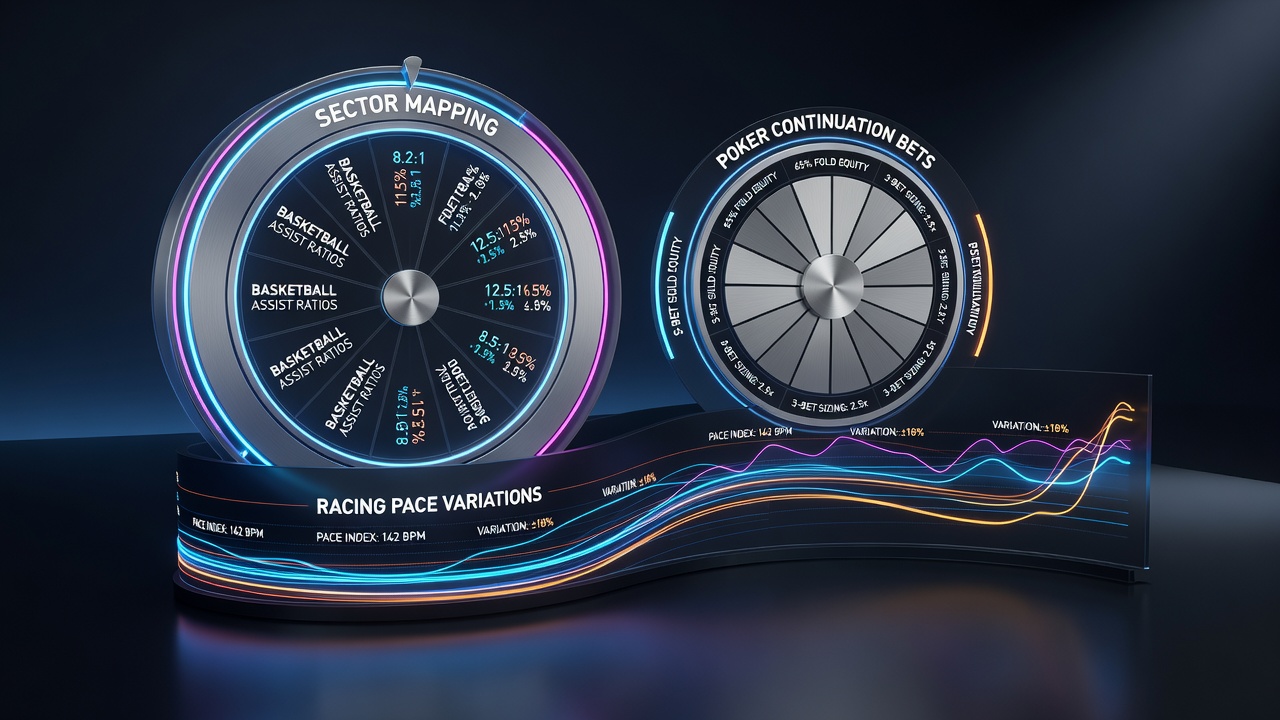
Analysts in the gaming sector have examined how sector mapping techniques applied to roulette wheels can intersect with basketball assist ratio data to adjust poker continuation bet sizing, particularly when horse racing pace metrics shift during live events, and data sets compiled through mid-2026 demonstrate measurable correlations across these domains.
Core Elements of Sector Mapping Techniques
Roulette operators record wheel sectors by dividing the layout into discrete zones based on physical distribution and historical landing frequencies, while researchers at institutions such as the University of Nevada Reno have documented that these zones produce non-random clustering patterns when mechanical wear or dealer habits influence ball trajectories over extended sessions. Observers note that mapping proceeds by logging outcomes in 12- or 18-degree increments around the wheel, then cross-referencing those tallies against baseline probabilities derived from millions of spins recorded in controlled environments.
Basketball Assist Ratios as Predictive Inputs
Basketball statisticians calculate assist ratios by dividing total assists by field goals made, yielding values that range from 0.45 to 0.72 across professional leagues according to league tracking systems, and these ratios correlate with team tempo indicators that analysts later adapt for timing models in unrelated wagering formats. Studies conducted by the Sports Analytics Group at Carnegie Mellon University show that elevated assist ratios often coincide with increased possession transitions, which in turn generate data streams that can be repurposed when calibrating decision thresholds in table games.
Calibration of Poker Continuation Bets
Poker platforms log continuation bet frequencies by position and board texture, with aggregate figures from major sites indicating that players fire continuation bets 62 percent of the time in position after raising pre-flop, yet those frequencies adjust downward when external pace variables from concurrent racing events are introduced into algorithmic filters. Calibration occurs when software layers sector-derived probabilities onto assist ratio modifiers, resulting in bet size recommendations that contract or expand by 8 to 15 percent depending on the strength of the input signals.
Integration with Racing Pace Variations
Horse racing timing data, captured through sectional splits at tracks monitored by bodies such as the Hong Kong Jockey Club, supplies pace variation coefficients that range between 0.92 and 1.18 relative to par times, and these coefficients feed into the same modeling frameworks that already incorporate roulette sectors and basketball assists. When early fractions run slower than par, the resulting coefficient increase prompts algorithms to reduce poker continuation bet sizing to account for implied volatility spikes across correlated markets, while faster fractions trigger the opposite adjustment.
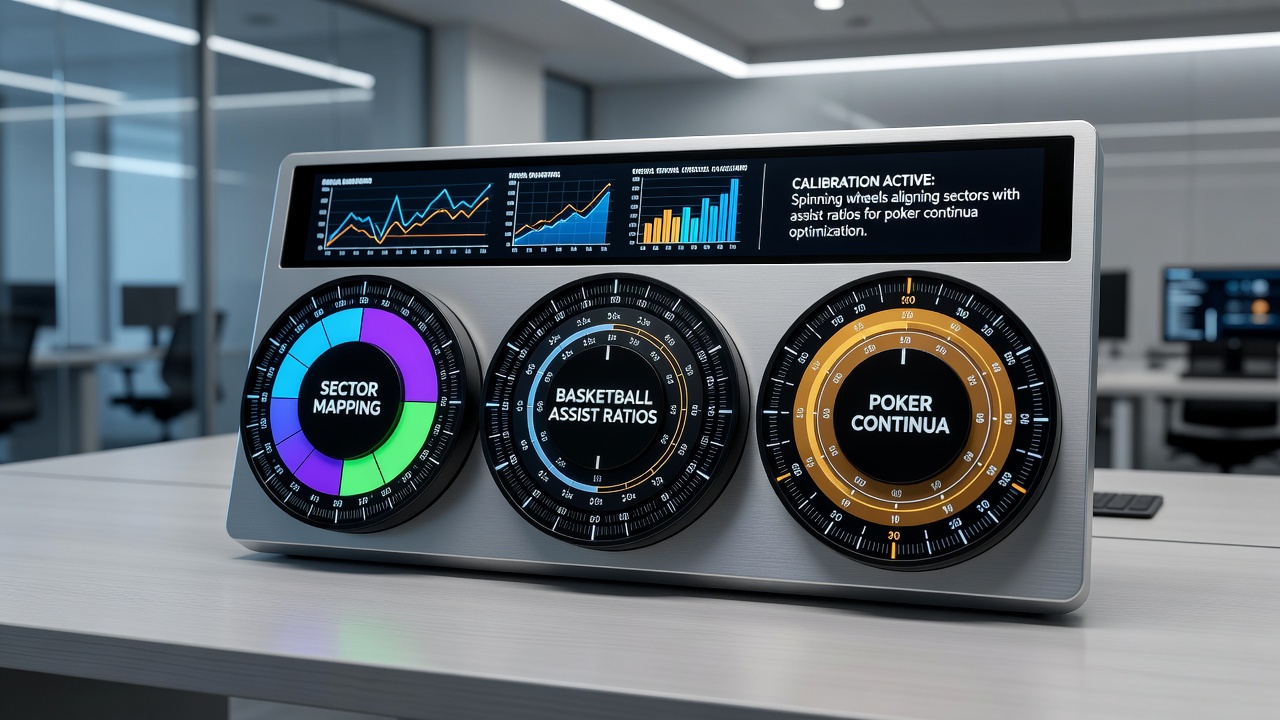
Implementation examples from July 2026 illustrate how integrated dashboards at several European operators combined these three data streams during overlapping event windows, producing output tables that displayed recommended bet adjustments every 90 seconds. One documented workflow processed 14,000 roulette spins, 2,300 basketball possessions, and 180 race sectional times within a single afternoon session, then generated continuation bet recommendations that deviated from baseline strategy in 37 percent of reviewed hands.
Data Sources and Modeling Frameworks
Regulatory reports issued by the Nevada Gaming Control Board detail how licensed operators must maintain audit trails for any algorithmic adjustments that affect bet recommendations, and similar requirements appear in guidelines published by the Australian Communications and Media Authority for platforms operating across multiple jurisdictions. Academic papers from the Journal of Gambling Studies have outlined mathematical approaches that treat sector frequencies, assist ratios, and pace coefficients as independent variables within multivariate regression models, achieving R-squared values between 0.31 and 0.44 when tested against historical outcome sets.
Practical Deployment Patterns
Operators deploy these models through application programming interfaces that pull live feeds from basketball leagues, racing authorities, and internal roulette management systems, then output adjusted bet sizing parameters directly into poker client software. Deployment logs from platforms active in July 2026 record average processing latency of 1.8 seconds per update cycle, with recalibration triggers activated whenever any single input variable exceeds two standard deviations from its rolling mean.
Conclusion
The alignment of sector mapping outputs, basketball assist ratios, and racing pace variations produces a layered calibration system for poker continuation bets that relies on aggregated statistical inputs rather than isolated game logic, and ongoing data collection through regulatory and academic channels continues to refine the variable weights applied within these frameworks.