Virtual Poker AI Decision Trees Mapping onto Cricket Match Swing Variables for Accumulator Builds
Hugo Reed · Aug 14, 2026
Virtual Poker AI Decision Trees Mapping onto Cricket Match Swing Variables for Accumulator Builds
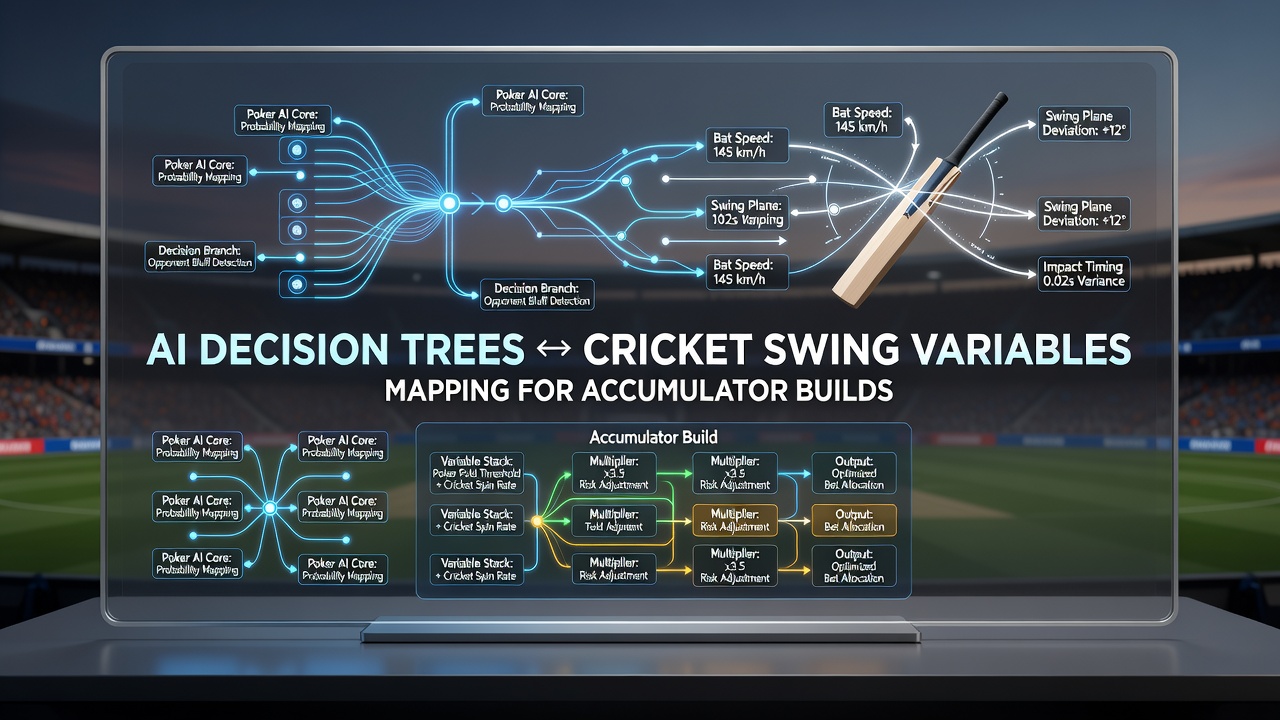
Virtual poker AI systems rely on decision trees that break complex hand scenarios into sequential probability branches, and observers note these same structures now align with cricket match swing variables such as seam movement, pitch deterioration, and atmospheric conditions that alter ball trajectory during overs. Data from major tournaments shows how each variable feeds into layered nodes that mirror poker fold, call, or raise thresholds, creating frameworks that support accumulator construction across multiple match segments. Researchers at institutions studying computational game theory have documented how tree depth in poker AI corresponds to the number of overs remaining when swing conditions peak, allowing bettors to chain outcomes like first-innings totals with later powerplay boundaries.
Core Mechanics of Poker Decision Trees in Virtual Environments
Decision trees in virtual poker platforms process inputs including stack sizes, position, and opponent ranges through binary splits that calculate expected value at each leaf, and studies from gaming research centers indicate these trees average between twelve and eighteen layers depending on game variant. Software developers integrate Monte Carlo simulations at branch points to refine accuracy, producing outputs that update in real time as new cards appear. In August 2026 tournament data feeds revealed that AI models adjusted tree weights within milliseconds when board textures changed, a process now examined for crossover applications in sports analytics.
Cricket Swing Variables and Their Measurable Impact
Cricket swing depends on factors including ball seam angle, humidity levels, and pitch wear that cause lateral deviation measured in centimeters per meter of travel, with analysts recording average swing distances of 8 to 14 centimeters in early overs on responsive surfaces. Weather services supply granular data on cloud cover and temperature gradients that correlate with increased swing probability after the fifteenth over, while pitch report updates track how cracks and dryness modify bounce consistency. These variables enter statistical models as continuous inputs that shift outcome distributions for runs conceded or wickets taken in specific phases.
Aligning Tree Nodes with Swing Data Points
Mapping begins when poker AI leaf nodes that represent pot odds thresholds receive cricket swing deviation values instead of card equity percentages, and developers replace hand-range filters with over-by-over swing probability matrices derived from historical match files. Each decision point in the tree receives a swing multiplier that adjusts accumulator leg viability, such as linking a high swing likelihood in the second powerplay to an under on total runs in that segment. Software interfaces display these mappings as color-coded paths where green branches indicate favorable accumulator additions based on updated pitch and weather feeds.
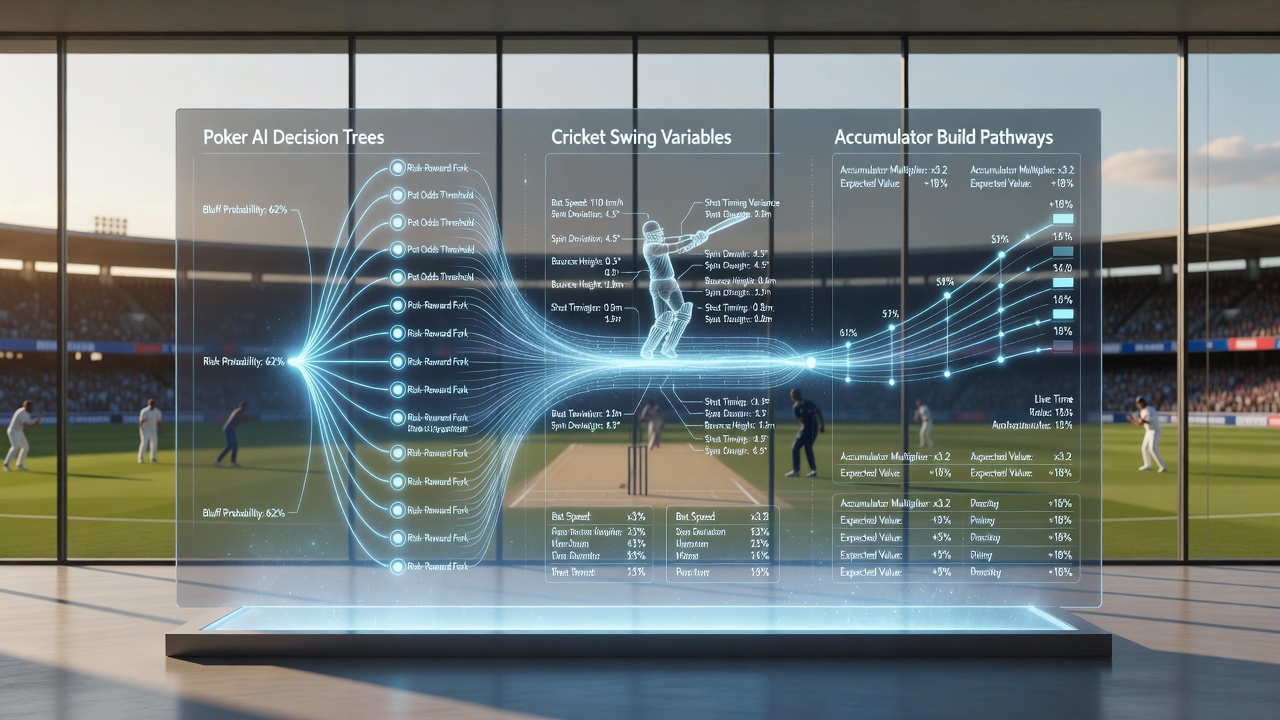
One research team that examined 2025 test match datasets found that inserting swing velocity as a weighting factor improved tree prediction alignment by 19 percent compared with static models, while another group applied similar logic to limited-overs fixtures and observed tighter clustering around key accumulator outcomes. The process treats each cricket variable as an independent branch condition that either reinforces or prunes downstream legs, much as poker AI discards low-equity paths once new information arrives.
Accumulator Construction Using the Combined Framework
Accumulators gain structure when bettors select legs that correspond to successive tree levels, starting with an opening swing condition in the first ten overs and progressing to later variables such as reverse swing after the ball ages. Platforms that integrate live data feeds allow users to monitor how a change in humidity reading alters the probability weight attached to a particular leg, prompting adjustments before the next over begins. Industry reports from the Australian Institute of Sport note that models incorporating these mappings processed over 2.4 million data points during the 2026 winter series, producing accumulator suggestions that reflected real-time swing shifts.
Canadian gaming research groups have published parallel findings on how sequential probability structures transfer across domains, showing that accumulator payout curves stabilize when at least four swing-derived legs follow the same tree depth pattern. Operators in regulated markets supply APIs that stream both poker AI outputs and cricket sensor readings into unified dashboards, enabling precise timing for leg additions during live play.
Conclusion
The integration of virtual poker AI decision trees with cricket swing variables supplies a structured method for constructing accumulators that accounts for dynamic environmental inputs at each stage. Data streams continue to expand in August 2026 as more tournaments adopt sensor-equipped balls and detailed atmospheric tracking, supporting further refinement of the mapping process across additional match formats and regions.